(Voice of Paul) – While I was preparing to write the Joint Admission Matriculation Board (JAMB) examination for university admission some years ago, I attended one of the preparatory classes where the teacher revised the Circular Flow of Income in Economics. The whole concept rests on how each household in an economy contributes to the economy by offering factors of production such as land, labour, entrepreneurship, and raw materials to firms that produce goods and offer services, and in return, the firms reward the households with rent, wages, and profit respectively. The household would use their rewards to purchase goods and services produced by the firm, and the cycle of income continues that way, spurring investments and expenditures in the economy, and leading to its growth and buoyancy.

A real-life example is when a Nigerian company decides to manufacture a particular product that is usually imported into the country, Indomie noodles for example. If a Nigerian firm can source its raw materials such as wheat, and sorghum, its packaging materials such as paper, nylon, and other packaging equipment within Nigeria, the firm will have to pay all the Nigerian suppliers within Nigeria – and pay them in Naira.
The firm will also pay all the employees in the firms, assuming that they are all Nigerians. And in return, everyone paid would buy the Indomie noodles from the firm. As the firm spends money on raw materials, labour, equipment, and entrepreneurship on every household represented in their firms, the household would return the cash to the firm by purchasing the Indomie noodles. And then the cycle goes on and on in such a way that both the firm and the household optimize their resources for better efficiency. This is the way that a country’s economic activity is measured for gross domestic product (GDP).
Dr. Allen Onyema’s Air Peace’s airline inaugural flight from Lagos to London is a significant economic achievement and the most wonderful part of this story is the Isi-Agu that the airline’s hostesses wore. Putting on the Isi-Agu is remarkable as the cultural and historical stories behind the design of these cloths have amazed the whole world – right now, a lot of people including myself would have known now that the Isi-Agu attire is reserved for men who have killed a leopard, a show of strength, valor and honour in the Igbo Culture. As short as the story is, there is an economic power behind it. This is true because the demand for cloth can rise astronomically and it can become a global phenomenon. The same way that global consumers adore those who wear expensive Balenciaga, Prada, or Louis Vuitton, is the same way that those who are not Nigerians would appreciate the magnificence of Isi-Agu.
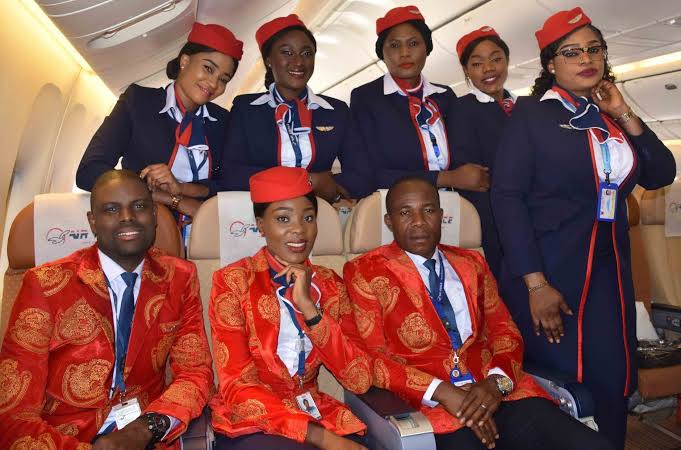
Provided that there is a global demand for Isi-Agu, the purchase order from these demands would flow to the Nigerians manufacturing the cloth, and in return, the producers would have to hire a lot of people to help them meet the demands – hiring people would mean that people have jobs, their taxes, insurance, retirement, social security packages are paid – and that way, the government has more money to reinvest into the economy – this is the way to grow an economy.
Additionally, one of the passengers on Air Peace posted that the airline served pounded yam, and Jollof rice on board. This is huge and commendable. What will happen is that demand for pounded yam, efo riro, oha soup, ogbono, egusi would increase astronomically and by so doing give jobs to people in the value chain of that business. Imagine that Nigeria manufactures all the Boeing airplanes that Air Peace wants to purchase. Statistically, it would cost Air Peace about 20 trillion Naira to purchase these planes, but the sad part of it is that the money would go to the American economy and not into the Nigerian economy.
Last but not least, we need to give accolades to the Nigerian President, Bola Ahmed Tinubu for granting approvals to Air Peace. I learned that the company has faced obstacles for years in getting permits. In essence, let us support everything Nigerian, everything African, be it our language, food, clothes, vehicles, and many more, this is the only way to grow economically as a country and as a continent.
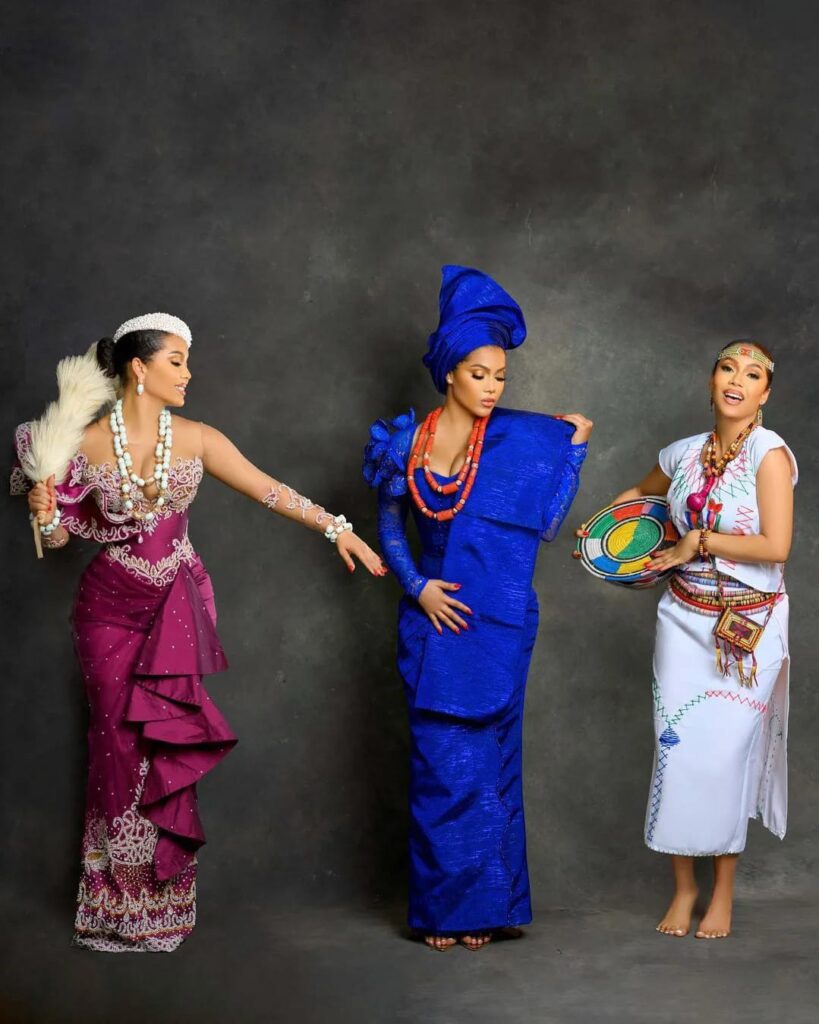
My only comment on Isi-Agu is that Nigeria is a multinational country, just like Russia with different ethnic groups with their own cultures, traditions, and philosophies of life and the most predominant are the Igbo, the Yoruba, and the Hausa. Since Air Peace still operates as a Nigerian firm and offers their services to everyone within the country, the company could have just represented all the cultures in their attire – this will show inclusivity and diversity as one of the values that the company believes in.