(Voice of Paul) – Can you help me check something on Google quickly? When you get on Google and type Mozambique in its search box, automatically, images such as deserts, mountains, and forests where animals live in sparsely populated areas with old houses would pop up.
This is true for many African countries that are less popular than Nigeria, South Africa, Kenya or Ghana. However, if you typed in the Google search box, countries like Australia, the Opera House at Sydney, and Brisbane skyscrapers would come up immediately. Although in reality, those places in Mozambique do exist, however, the country also has nice buildings in its Harare capital, worthy of being shown on Google imaging programs, to first-timers at least.

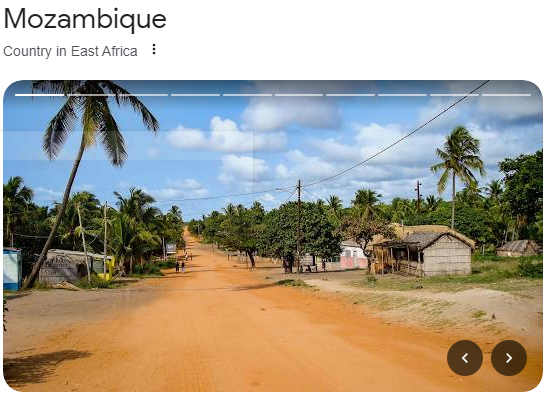
These wars of systematized and institutionalized image damage that the Western world has been waging against Africa has now flown into Artificial Intelligence (A.I) software. At least the research and the developments of the most common systems from Google (Gemini) and OpenAI are less than 20 years, therefore the data and the instructions that were fed into these systems were intentionally done to continue the image war against Africa, its people, its places and everything that associates with Africa.
At some points, some people have argued that Africa contributed nothing to human civilization when in fact, Africa started this modern-day civilization even with more advanced technologies before the invaders looted, destroyed, and hid most of them.
Like a popular saying that if you didn’t blow your trumpet, no one would blow it for you. If we don’t rescue the image of the black man in Jamaica, Namibia, and Togo, the black man in living in New Zealand would still be considered inferior. We therefore have a collective responsibility to this mission. To this end, I have presented to you Dominic Darby, the 11-year-old young man from Jamaica who has recently won the XPRIZE Connect Code Games competition after creating his own video game for the first time.
He was one of the only 17 winners out of the 3,000 people who joined the global competition last year. Around 70 participants were also from Jamaica. Darby was named “Best in Class” and given $1,000 cash prize in the Junior Division.
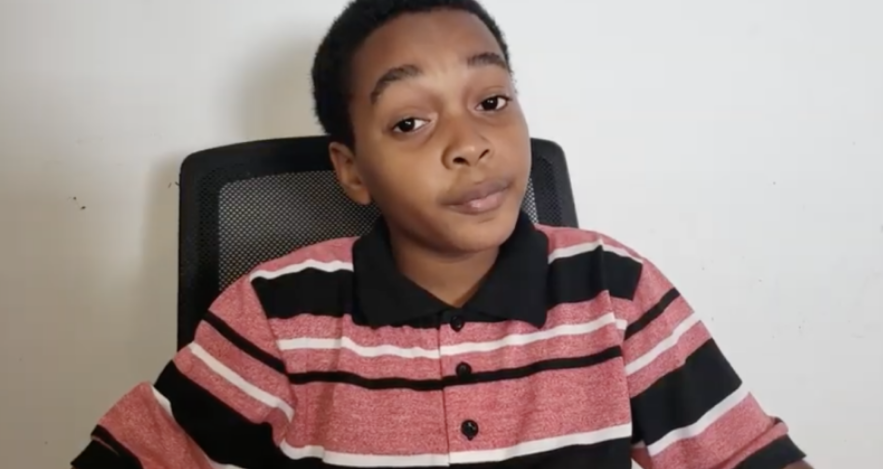
The competition was sponsored by the non-profit California-based XPRIZE, in partnership with video game developer E-Line Media and supported by Endless Network, which aims to improve lives through technology.
Darby used MIT’s Scratch coding software in creating his winning piece entitled “How To Fall” wherein the game character moved through multiple levels while getting away from different obstacles. It took him several months to finish the game, which is the first ever game he created.
Darby’s story is a beautiful one, emphasizing that every African child when given a levelled playing field would excel at every and any area of life – academics, sports, or business. Adult Africans owe it to the younger generations to ensure that our young people have a new identity, different from the ones enforced on us.